
INTRO
 Does your patio look like it’s seen better days? You’re not alone. Over time, dirt, grime, and stains can make any patio feel more like an eyesore than a welcoming outdoor retreat. The good news? Cleaning filthy patios doesn’t have to be a daunting task. With the right techniques and tools, you can restore your patio to its former glory and create a space you’ll love to spend time in. Let’s dive into how you can achieve that fresh, clean look in no time!
Why Is My Patio So Dirty?
Patios naturally collect dirt and debris due to their outdoor exposure. Understanding the cause of the grime can help you clean more effectively:
- Environmental factors: Rain, wind, and falling leaves contribute to debris accumulation.
- Stains from usage: Spills from barbecues, outdoor parties, and oil stains can linger.
- Mold and algae: Shaded or damp areas are prime spots for mold and algae growth.
How Can I Remove Patio Stains Easily?
Stains can make a patio look permanently damaged, but targeted solutions can help:
Identifying the Stains
- Oil stains: Common near grills or outdoor cooking areas.
- Rust marks: Often caused by metal furniture.
- Algae or mold: Creates green or black discoloration.
Removing the Stains
- For oil stains, sprinkle baking soda and scrub with a stiff brush.
- To treat rust marks, use a mixture of vinegar and water.
- Eliminate algae or mold by applying diluted bleach and rinsing thoroughly.
What Tools Do I Need?
Having the right tools makes cleaning filthy patios easier and more effective.
Essential Tools
- Pressure washer: For deep cleaning large areas.
- Stiff-bristle brush: Ideal for scrubbing stubborn stains.
- Garden hose: For rinsing off dirt and cleaning solutions.
- Bucket and mop: Useful for soaking and rinsing.
Eco-Friendly Options
- Reusable scrubbing pads.
- Biodegradable cleaning solutions to protect plants and pets.
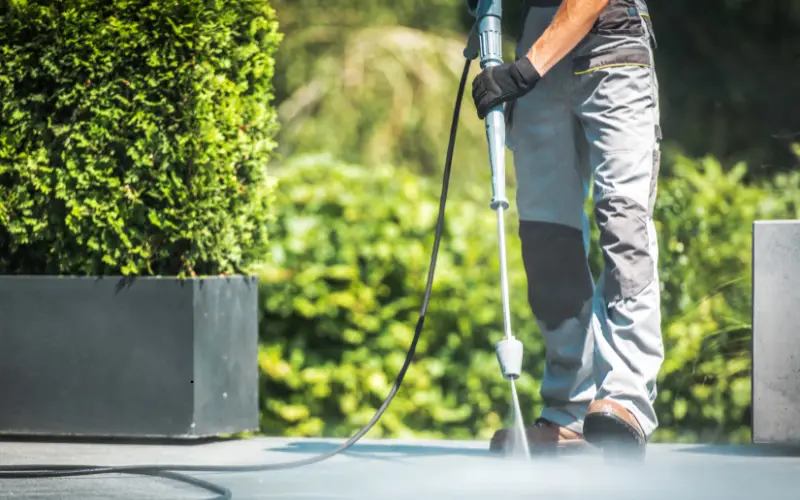
How to Pressure Wash a Patio Safely
Pressure washing is one of the most efficient ways to clean a patio, but it requires some care:
Step-by-Step Guide
- Remove loose debris by sweeping the area.
- Set the pressure washer to a low setting to avoid surface damage.
- Hold the nozzle 12 inches away from the surface and spray evenly.
- Use a circular motion to prevent streaks or missed spots.
Safety Tips
- Avoid pressure washing near delicate plants or furniture.
- Wear protective goggles and gloves for safety.
How Can I Deep Clean a Patio Without Chemicals?
If you prefer natural cleaning, here are some safe and effective methods:
DIY Natural Cleaning Solutions
- Vinegar and water: Mix equal parts and scrub into the patio surface.
- Baking soda paste: Use for spot cleaning stubborn stains.
Benefits of Non-Toxic Options
- Safe for kids, pets, and surrounding plants.
- Gentle on the patio surface, preventing damage over time.
Should I Scrub or Soak My Patio?
Both methods have their place in patio cleaning, depending on the level of grime:
- Scrubbing: Best for stubborn stains and heavily soiled areas.
- Soaking: Useful for loosening dirt on moderately dirty patios.
When to Use Each
For tough stains, start with a soak to loosen dirt, then scrub for a thorough clean.
How Can I Clean Mold Off My Patio?
Mold can make a patio slippery and unappealing. Here’s how to handle it:
- Sweep the area to remove loose debris.
- Mix a cleaning solution of bleach and water (1:10 ratio).
- Scrub the affected area with a stiff brush.
- Rinse thoroughly with water and allow it to dry.
Preventing Mold Regrowth
- Ensure proper drainage to avoid standing water.
- Use mold-resistant sealants on patio surfaces.
How Often Should I Clean My Patio?
Regular maintenance keeps your patio looking its best year-round.
Seasonal Cleaning Schedule
- Spring: Remove winter debris and stains.
- Summer: Focus on high-traffic areas.
- Fall: Clear leaves and prepare for winter weather.
Factors Affecting Frequency
- Location: Areas with heavy rainfall or tree coverage may need more frequent cleaning.
- Usage: Patios used for frequent gatherings may accumulate more dirt.
DIY Patio Cleaning vs. Professional Services
While DIY methods can work well, there are times when hiring professionals is the better choice.
DIY Benefits
- Cost-effective for smaller patios.
- Immediate satisfaction from doing it yourself.
Professional Advantages
- Access to advanced tools and techniques.
- Saves time, especially for large or heavily soiled patios.
Testimonials
“I couldn’t believe how easy these tips were! My patio looks brand new.” — Anna R., Boston, MA
“Hiring a professional was the best decision I made. It saved me so much time and effort!” — Chris P., Houston, TX
“My moldy patio was a nightmare, but now it’s spotless. Highly recommend these steps!” — Maria L., Los Angeles, CA
Did You Know?
“Did you know that regularly sweeping your patio can reduce mold growth by up to 50%, extending its lifespan?”
TL;DR Summary
- Identify the type of grime on your patio and use targeted cleaning solutions.
- Use tools like a pressure washer or natural cleaners for effective results.
- Consider professional cleaning for heavily soiled patios or large spaces.