
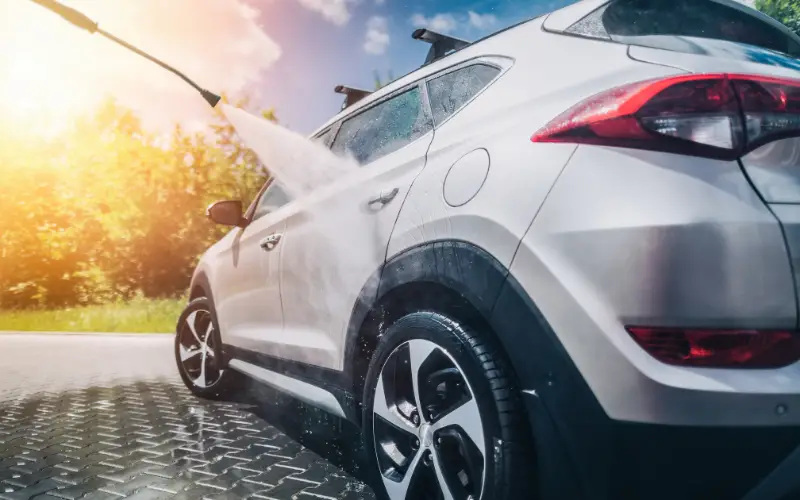
Power washing your car can be a fast and efficient way to clean off dirt, grime, and road debris, but is it the best option for your vehicle? While it saves time, improper power washing can damage your car’s paint and finishes. In this guide, we’ll cover everything you need to know about power washing your car, including tips for doing it safely, when to avoid it, and how professional services can help.
What is Power Washing for Cars?
Understanding Pressure Washing Basics
Power washing (or pressure washing) uses high-pressure water to clean surfaces quickly and effectively. For cars, this method helps remove stubborn dirt and road debris that regular hand washing might miss. However, using the wrong pressure or technique can damage your vehicle.
Types of Power Washers
Electric Power Washers:
- Suitable for light-duty cleaning.
- Usually operate at lower PSI (1200-1900).
Gas Power Washers:
- More powerful, often used for heavy-duty cleaning.
- Can reach higher PSI (2000+), which may be risky for car surfaces.
PSI and GPM Considerations
- PSI (Pounds per Square Inch): The pressure of the water stream.
- GPM (Gallons per Minute): The amount of water flowing through the washer.
For car washing, a PSI between 1200-1900 is ideal to avoid damage.
Benefits of Power Washing Your Car
Saves Time and Effort
Power washing a car is significantly faster than hand washing, making it ideal for those who want a quick cleaning solution.
Effective Dirt and Grime Removal
The high-pressure water effectively removes tough grime, road salt, and mud from hard-to-reach areas like wheel wells and undercarriages.
Risks of Power Washing Your Car
Potential Paint Damage
Using high-pressure water or the wrong nozzle can strip away paint, clear coats, and protective finishes.
Risk of Water Seepage
If high-pressure water is directed at seams, seals, or windows, it can seep into the interior, causing damage.
Surface Scratches and Swirl Marks
Incorrect techniques, such as holding the nozzle too close, can leave swirl marks or fine scratches on your car’s surface.
When to Avoid Power Washing Your Car
Old or Damaged Paint
If your car’s paint is chipped, faded, or peeling, power washing can exacerbate the damage.
Loose Parts or Accessories
Power washing can dislodge loose parts, emblems, or decals, leading to unnecessary repairs.
Safe Techniques for Power Washing Your Car
Recommended Pressure Settings
- Stick to a pressure range of 1200-1900 PSI for safety.
- Start at a lower pressure and gradually increase if needed.
Nozzle Types and Distances
- Use a 25-degree nozzle (green) or a 40-degree nozzle (white) for the safest wash.
- Maintain a distance of 12-24 inches from the car’s surface.
Step-by-Step Guide to Power Washing
Pre-Wash Preparation
- Rinse the Car: Remove loose dirt with a gentle rinse.
- Use Car-Safe Detergent: Apply a foaming car detergent to loosen grime.
Power Washing Process
- Start from the Top: Wash from the roof downward to avoid recontamination.
- Keep Moving: Don’t hold the nozzle in one spot for too long.
Post-Wash Care
- Rinse Thoroughly: Remove all soap residue.
- Dry the Car: Use a microfiber towel or air blower to prevent water spots.
DIY vs. Professional Car Wash Services
DIY Car Wash Risks
While DIY power washing can save money, it comes with risks such as paint damage, water seepage, and improper technique.
Benefits of Hiring Professionals
Professional car wash services use safe pressure settings, specialized equipment, and expert techniques to protect your car’s finish.
Testimonials
- “Professional power washing kept my car spotless without any damage!” — Alex D., Seattle, WA
- “I tried DIY power washing, and it left streaks on my paint. Never again!” — Maria K., Denver, CO
Did You Know?
“Did you know that using a power washer with more than 2000 PSI can strip your car’s paint in seconds? Always stick to safe pressure levels.”
TL;DR Summary
- Power washing is quick but can damage your car if done improperly.
- Use 1200-1900 PSI and a 25- or 40-degree nozzle for safety.
- Consider professional services for the best results and to avoid risks.
FAQ
Not always. Older cars or those with damaged paint may be at risk.
A PSI between 1200-1900 is generally safe for cars.
Yes, using high pressure or the wrong nozzle can cause damage.
No more than once a month to avoid potential damage.
Yes, professionals use safe techniques to protect your car's finish.