
What Are Tough Stains?
 Tough stains are the ones that stick around no matter how much you scrub. These can be caused by substances that penetrate deep into surfaces or bond chemically, making removal a challenge.
Common examples include:
- Oil and grease spills
- Rust and mineral deposits
- Mold and mildew growth
- Paint splatters
These stains often require more than just soap and water for complete removal.
How Does Pressure Washing Work?
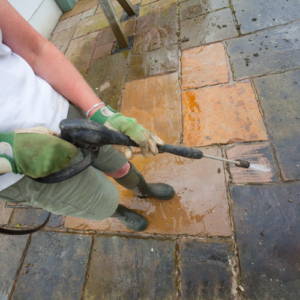
Pressure washing uses high-pressure water jets to break down dirt, grime, and stains from surfaces like concrete, wood, and siding.
The Key Components of Pressure Washing:
- High Pressure: Breaks up tough stains.
- Specialized Detergents: Loosens grime for easier removal.
- Heat (Optional): Hot water can enhance the cleaning process.
Pressure washing is more effective than traditional scrubbing because it can reach deeper into porous materials, lifting stains that would otherwise remain.
Types of Pressure Washers
- Gas Pressure Washers: Ideal for heavy-duty cleaning like oil or rust stains.
- Electric Pressure Washers: Better for lighter cleaning tasks.
Choosing the right machine can make a big difference in your results.
Can Pressure Washing Remove Oil Stains?
Oil stains on driveways and garages are a common issue, especially in homes with vehicles. Pressure washing can effectively remove these stains when paired with degreasers.
Pro Tips for Oil Stains:
- Use a high-pressure setting with hot water.
- Apply a degreaser to loosen the oil before washing.
- Allow the detergent to sit for 10-15 minutes for optimal results.
Removing Rust and Mineral Stains
Rust and mineral stains are caused by metal objects or hard water. These stains are particularly stubborn due to their chemical composition.
How to Tackle Rust:
- Use specialized rust removers before pressure washing.
- Opt for a rotary nozzle for better stain penetration.
With the right approach, pressure washing can leave surfaces looking as good as new.
Does Pressure Washing Work on Paint?
Pressure washing can sometimes remove paint, especially if the paint is old or flaking. While this is useful for stripping paint off surfaces like decks, it requires caution.
When to Be Careful:
- Avoid high-pressure settings on wood or siding.
- Test a small area to see how the surface reacts.
Professional services ensure that only unwanted paint is removed without damaging the underlying material.
The Importance of Using the Right Technique
Pressure washing isn’t just about blasting water at a surface. The right technique ensures better results and prevents accidental damage.
Key Factors:
- Nozzle Choice: Different nozzles control water pressure and spray patterns.
- Distance: Keep the nozzle 6-12 inches away to avoid surface damage.
- Pressure Setting: Adjust based on the material being cleaned.
Benefits of Hiring Professional Services
Professional pressure washing services offer a level of expertise and equipment that most homeowners don’t have access to.
Why Go Professional?
- They know which detergents and techniques to use for different stains.
- They can prevent damage to delicate surfaces.
- Time-saving and stress-free results.
DIY Pressure Washing vs. Professional Services
 While DIY pressure washing can save money, it often falls short when dealing with tough stains.
DIY Drawbacks:
- Limited equipment capability.
- Risk of damaging surfaces or injuring yourself.
- Time-consuming without guaranteed results.
Professional services handle these challenges with ease, delivering superior results in less time.
Testimonials
- “I couldn’t believe how clean my driveway looked after they removed years of grease stains!” — Sarah J., Austin, TX
- “They saved my patio from rust marks I thought were permanent!” — Daniel P., Denver, CO
- “The results speak for themselves—my siding looks brand new!” — Olivia M., Orlando, FL
Did You Know?
Did you know that professional pressure washing can remove up to 99% of bacteria and mold from outdoor surfaces? Regular cleaning doesn’t just improve appearance—it also boosts health and safety.
TL;DR Summary
- Pressure washing is highly effective for tough stains like oil, rust, and mildew.
- Professional services use advanced equipment for optimal results.
- DIY attempts can be risky without proper technique or tools